Korean Bibimbap
Highlighted under: International Kitchen
Korean Bibimbap is a vibrant and flavorful rice dish topped with an assortment of vegetables, protein, and a spicy sauce.
Korean Bibimbap is not just a meal; it's a delightful experience of flavors and textures. This traditional dish represents harmony in cooking, showcasing a colorful array of vegetables and proteins all atop a bed of warm rice.
Why You'll Love This Recipe
- A colorful and nutritious meal that is as pleasing to the eye as it is to the palate.
- Versatile and customizable with your favorite vegetables and proteins.
- The perfect balance of savory and spicy, especially with the gochujang sauce.
The History of Bibimbap
Bibimbap, which translates to 'mixed rice,' has a rich history rooted in Korean culture. Traditionally, it was a meal designed to use up leftover ingredients, making it a practical yet delicious choice for many households. The dish gained popularity during the Joseon Dynasty and has since become a staple in both Korean homes and restaurants around the world.
In the past, bibimbap was often served in a hot stone bowl, known as dolsot bibimbap, which creates a delightful crispy layer of rice at the bottom. This version has become a favorite for its texture and the way the ingredients meld together when mixed.
Today, bibimbap is celebrated for its vibrant colors and variety of flavors, representing the harmony of nature and cuisine. Each ingredient is chosen not just for taste but also for its nutritional value, making bibimbap a balanced meal.
Choosing Your Ingredients
One of the best things about bibimbap is its versatility. While the recipe includes specific vegetables and proteins, feel free to customize your bowl with whatever you have on hand. Popular additions include bell peppers, radishes, and even kimchi, allowing you to create a dish that suits your palate.
For proteins, you can opt for traditional choices like bulgogi (marinated beef) or go vegetarian with tofu. The key is to ensure that your ingredients are fresh and of high quality, as this will enhance the overall flavor profile of your bibimbap.
Don’t forget about the sauces! The gochujang is essential for that signature spicy kick, but you can also experiment with other sauces, such as soy sauce or even a sesame dressing, to add depth to your dish.
Serving Tips and Variations
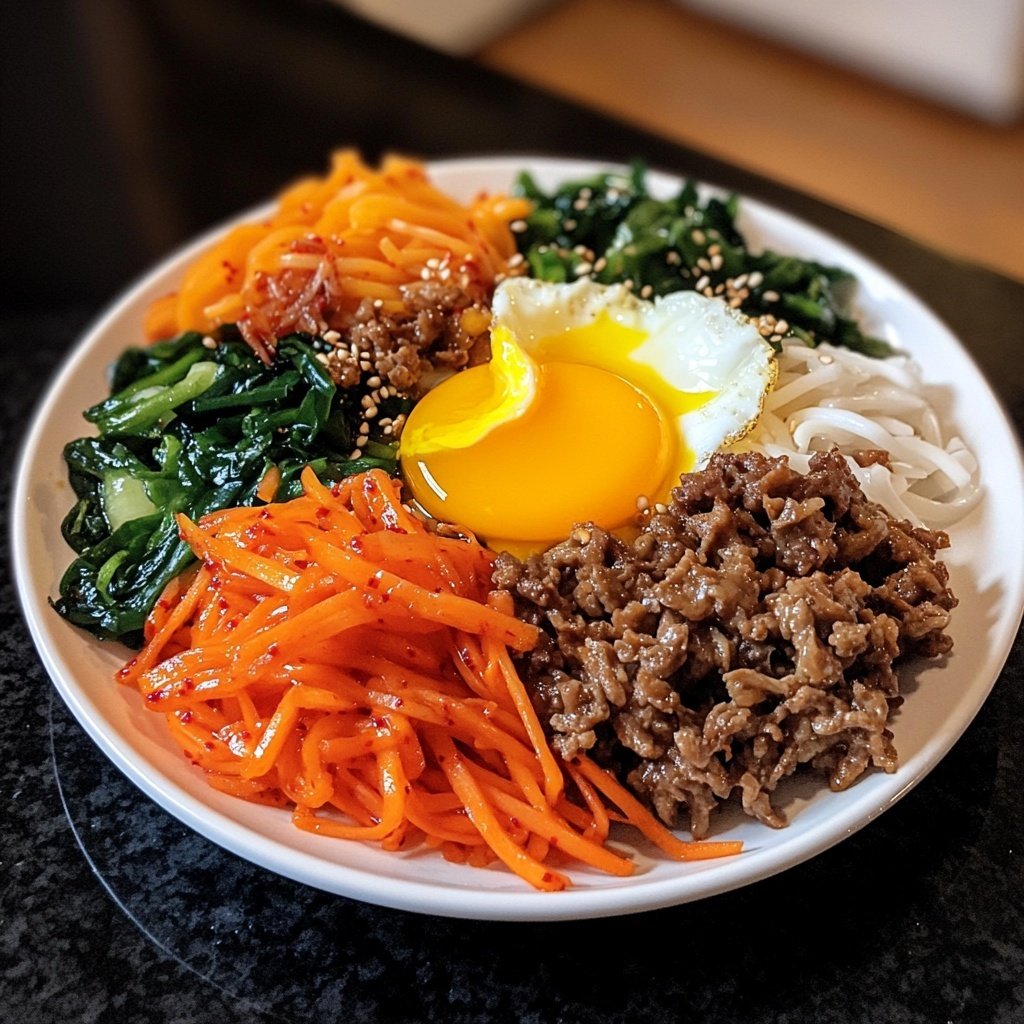
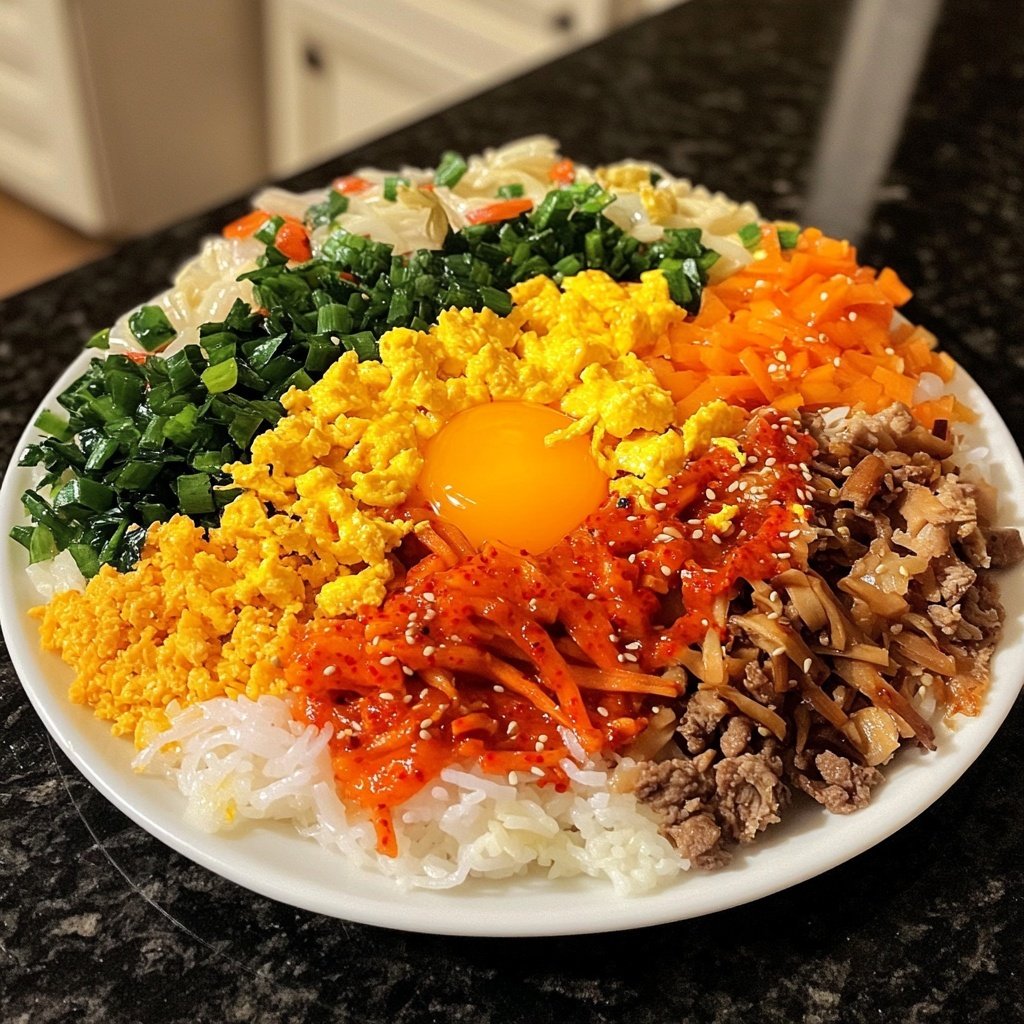
When serving bibimbap, presentation is key. Arrange the vegetables in a way that showcases their vibrant colors, making the dish visually appealing. This not only enhances the dining experience but also entices everyone to dig in and enjoy.
Consider serving your bibimbap in individual bowls for a personal touch. This allows each person to mix their ingredients to their liking, making it a fun and interactive meal. Pair it with a side of kimchi or pickled vegetables for an authentic Korean experience.
For a twist on the traditional recipe, try adding a fried egg on top or sprinkle some toasted sesame seeds for extra crunch. You can also make a spicy version by adding more gochujang or even a splash of sriracha for those who love heat.
Ingredients
For the Bibimbap
- 2 cups cooked rice
- 1 cup spinach, blanched
- 1 cup bean sprouts, blanched
- 1 zucchini, julienned
- 1 carrot, julienned
- 4 shiitake mushrooms, sliced
- 2 eggs
- Gochujang (Korean chili paste)
- Sesame oil
- Soy sauce
- Salt and pepper to taste
Feel free to substitute any vegetables to your liking!
Instructions
Prepare the Vegetables
In a pan, sauté the zucchini, carrot, and mushrooms separately in a little sesame oil until tender. Season with salt and pepper.
Cook the Eggs
Fry the eggs sunny-side up in a non-stick skillet.
Assemble the Bibimbap
In a bowl, place a serving of rice at the bottom. Arrange the sautéed vegetables, blanched spinach, and bean sprouts on top of the rice. Add the fried egg in the center.
Add Sauce and Serve
Drizzle with gochujang and sesame oil, and serve immediately. Mix everything together before eating!
Enjoy your homemade bibimbap!
Pro Tips
- For extra flavor, try adding marinated beef or tofu as a protein option.
Nutritional Benefits of Bibimbap
Bibimbap is not only delicious but also packed with nutrients. The combination of various vegetables provides a wide array of vitamins and minerals, making it a healthful choice. Spinach, for example, is rich in iron and antioxidants, while carrots provide beta-carotene, which is great for eye health.
The protein source you choose can also enhance the dish's nutritional value. Lean meats like chicken or beef offer protein without excessive fat, while tofu provides a wonderful plant-based option that is high in protein and low in calories.
Additionally, the use of sesame oil and gochujang contributes healthy fats and spices, respectively, which can have anti-inflammatory properties. This makes bibimbap a balanced meal that supports a healthy lifestyle.
Storing and Reheating Leftovers
If you find yourself with leftover bibimbap, don't worry! You can store it in an airtight container in the refrigerator for up to three days. Just be sure to keep the gochujang and any sauces separate until you’re ready to eat to prevent the rice from becoming soggy.
When reheating, it's best to do so in a microwave-safe bowl. Add a splash of water to the rice to keep it moist, cover it with a microwave-safe lid, and heat in short intervals until warmed through. You can also consider reheating in a skillet on low heat for a crispy texture.
Remember, the flavors of the bibimbap may deepen and meld together after a day in the fridge, making your leftovers just as enjoyable as the first serving. Just remember to add fresh toppings, like a fried egg or more vegetables, to elevate the dish.
Questions About Recipes
→ Can I use brown rice instead of white rice?
Yes, brown rice can be used for a healthier option, but adjust the cooking time as it may take longer to cook.
→ What can I substitute for gochujang?
If you can't find gochujang, you can use a mix of miso paste and chili powder, though the flavor will differ.
→ Is this dish vegetarian-friendly?
Yes, you can make it vegetarian by omitting the egg or using a tofu substitute.
→ How can I make bibimbap spicier?
Add more gochujang or sprinkle some chili flakes on top for an extra kick.
Korean Bibimbap
Created by: Maribel Hawthorne
Recipe Type: International Kitchen
Skill Level: Intermediate
Final Quantity: 4 servings
What You'll Need
For the Bibimbap
- 2 cups cooked rice
- 1 cup spinach, blanched
- 1 cup bean sprouts, blanched
- 1 zucchini, julienned
- 1 carrot, julienned
- 4 shiitake mushrooms, sliced
- 2 eggs
- Gochujang (Korean chili paste)
- Sesame oil
- Soy sauce
- Salt and pepper to taste
How-To Steps
In a pan, sauté the zucchini, carrot, and mushrooms separately in a little sesame oil until tender. Season with salt and pepper.
Fry the eggs sunny-side up in a non-stick skillet.
In a bowl, place a serving of rice at the bottom. Arrange the sautéed vegetables, blanched spinach, and bean sprouts on top of the rice. Add the fried egg in the center.
Drizzle with gochujang and sesame oil, and serve immediately. Mix everything together before eating!
Extra Tips
- For extra flavor, try adding marinated beef or tofu as a protein option.
Nutritional Breakdown (Per Serving)
- Calories: 500 kcal
- Total Fat: 20g
- Saturated Fat: 4g
- Cholesterol: 186mg
- Sodium: 600mg
- Total Carbohydrates: 70g
- Dietary Fiber: 5g
- Sugars: 5g
- Protein: 15g